
Maximise your small kitchen storage in the UK by focusing on vertical space, using tall cabinets, wall-mounted shelves, slim pull-out units, and internal organisers. Combine this with decluttering, functional zoning, and clever use of underused spaces to double your effective storage.
Small kitchen storage ideas don’t need to be complicated or expensive. We’ve designed hundreds of compact kitchens across the UK, and the solution is simpler than you think: use vertical space, organise what you have, and choose smart storage solutions that fit your layout. Whether you’re in a flat, terrace, or rental property, the right small kitchen storage solutions transform how your space works. For full kitchen transformations, see our kitchen renovation services.
Book a free kitchen design consultation | Explore our Kitchen services
This guide covers everything from tiny kitchen storage ideas to budget-friendly options that actually deliver results. Let’s maximise your kitchen’s potential.
Before You Add Storage: Plan Your Small Kitchen the Smart Way
Skip this section, and you’ll likely waste time and money. Proper planning comes first.
Measure, declutter, and zone your kitchen.
Start with accurate measurements. Measure every wall, cabinet, and gap before buying anything. We’ve seen clients spend hundreds on units that don’t fit.
What to measure:
- Wall heights, widths, and depths
- Cabinet dimensions (internal and external)
- Gap spaces between appliances
- Ceiling height for tall units
Photograph your space from multiple angles. This preparation prevents expensive mistakes.
Next, declutter ruthlessly. Pull everything out of your cabinets and drawers. If you haven’t used it in the past 6 months, you probably don’t need it.
Create functional zones based on how you actually cook:
- Prep zone: Keep cutting boards, knives, and mixing bowls near your worktop
- Cooking zone: Store pots, pans, and utensils near the hob
- Cleaning zone: Place dishes, detergent, and cloths close to the sink or dishwasher
This zoning principle reduces movement and makes small kitchens function like larger ones.
Common small kitchen layouts in UK homes
Galley kitchens are standard in terraced houses and older flats. You’ve got two parallel walls and limited floor space. Storage must be vertical and efficient.
L-shaped kitchens suit corner spaces in apartments. These layouts offer decent wall storage but often waste space in the corners.
Single-wall kitchens appear in studio flats and bedsits. Every centimetre of wall height matters here.
Understanding your layout type helps you choose appropriate storage solutions. What works in a galley kitchen might fail in an L-shaped space.
Vertical Storage Ideas for Small Kitchens
When floor space is tight, build upwards. Vertical storage is your best return on investment.
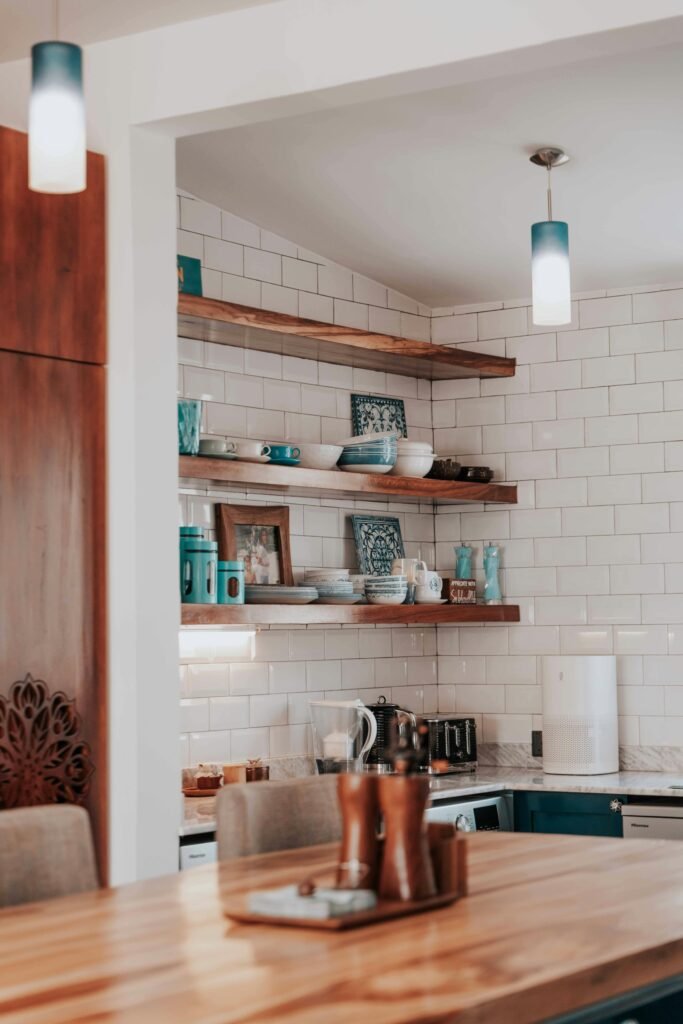
Wall-mounted shelves
Open shelving creates storage without the bulk of cabinets. It makes small kitchens feel larger because you can see the wall behind.
Installation guidelines:
- Install shelves 30-40cm apart for plates and bowls
- Space them 45cm apart for taller items like glasses or jars
- Choose solid wood or metal brackets rated for kitchen use
- Avoid cheap brackets that sag under weight
Strategic placement tips:
- Place frequently used items on lower shelves
- Keep occasional-use pieces higher up
- This prevents constant reaching and streching
Wall shelves work brilliantly in rental properties. Most landlords permit shelf installation provided the wall plugs are installed properly.
Floor-to-ceiling cabinets
Tall cabinets maximise cubic storage. They use space that would otherwise sit empty above standard units.
Key benefits:
- A 2.4-metre tall larder cabinet stores more than three standard base units combined
- Creates a focal point rather than overwhelming the space
- Modern soft-close mechanisms make high shelves accessible
- No step ladder needed for everyday items when properly organised
Position these cabinets at the end of a run or in a corner for maximum impact.
Pegboards, rails, and hooks
Pegboards aren’t just for workshops. They create flexible storage that adapts as your needs change.
Best uses:
- Mount behind your hob or prep area
- Hang utensils, measuring cups, and small pans within easy reach
- Rail systems with S-hooks work well above countertops
- Keep cooking tools visible and accessible without cluttering drawers
Installation tip: Install these systems into wall studs or use heavy-duty wall plugs. A falling pegboard full of tools is dangerous and damages walls.
Magnetic storage
Magnetic knife strips free up drawer space and keep blades sharper. Knives stored loose in drawers get damaged quickly.
Where to install:
- Any spare wall section
- Sides of cabinets
- Above worktops for easy access
What they hold:
- Knives and scissors
- Metal utensil sets
- Magnetic spice racks on the side of your fridge or metal splashbacks
This storage type costs little but delivers impressive results in tight spaces.
Using the sides of cabinets and appliances
Cabinet sides and appliance gaps are often ignored. These areas offer surprising storage potential.
Smart solutions:
- Attach slim rails or racks to exposed cabinet ends
- Store baking trays, cutting boards, or cooling racks vertically
- Use the side of your fridge for hooks (tea towels, shopping bags, aprons)
- Narrow pull-out units fit in gaps as small as 15cm
- Slide-out racks hold spices, oils, or cleaning supplies
Use command strips if you’re renting to avoid damaging the walls.
Cabinet & Drawer Storage Ideas That Multiply Space
Internal cabinet organisation matters more than the quantity of external storage. Poor internal layout wastes half your space.
Deep drawers instead of cabinets
Deep drawers provide better access than cabinets with shelves. You see everything without kneeling or reaching into dark corners.
Why they work better:
- Pan drawers eliminate the noise and chaos of stacking pots
- Each piece sits flat and accessible
- 40% better accessibility than standard cabinets
- Soft-close mechanisms prevent slamming and extend kitchen life
Drawer systems cost more upfront but significantly improve daily kitchen use.
Pull-out pantry units
Pull-out pantry systems bring everything into view with one movement. No more forgotten tins at the back of shelves.
Technical specifications:
- Fit in 300mm or 400mm cabinet widths (standard UK sizing)
- Choose units with adjustable shelves
- Your storage needs will change over time
Quality matters: Cheap runners fail within a year. Invest in Blum or similar-branded hardware that lasts for decades.
Corner cabinet solutions
Corners waste space in most kitchens. Standard shelves leave 40-60% of the area unusable.
Solution options:
- Lazy Susan turntables: Improve access but don’t maximise space (best for oils and vinegars)
- Magic corner systems: Use all available depth with linked baskets that pull out and swing forward
- LeMans units: Similar functionality at lower cost with two independent rotating shelves
Result: These solutions add 30-50% more usable storage to corner cabinets.
Drawer dividers
Cutlery trays are standard, but most drawers need more organisation than that.
Divider options:
- Adjustable dividers create sections sized for your specific items
- Bamboo dividers suit most drawer styles and handle moisture well
- Plastic versions are cheaper but look budget
- Tiered organisers divide deep drawers into layers
Store tea towels on top and larger items below for maximum efficiency.
Storage inside cabinet doors
Cabinet doors offer vertical storage that most people ignore. The inside surface is valuable real estate.
What to mount:
- Slim racks for cling film, foil, and baking paper
- Spice racks for frequently used seasonings
- Adhesive hooks for measuring cups, oven gloves, or small utensils
Just ensure the door closes properly with the added depth. Command hooks work perfectly in rental properties.
Small Kitchen Countertop Storage Ideas (Without the Clutter)
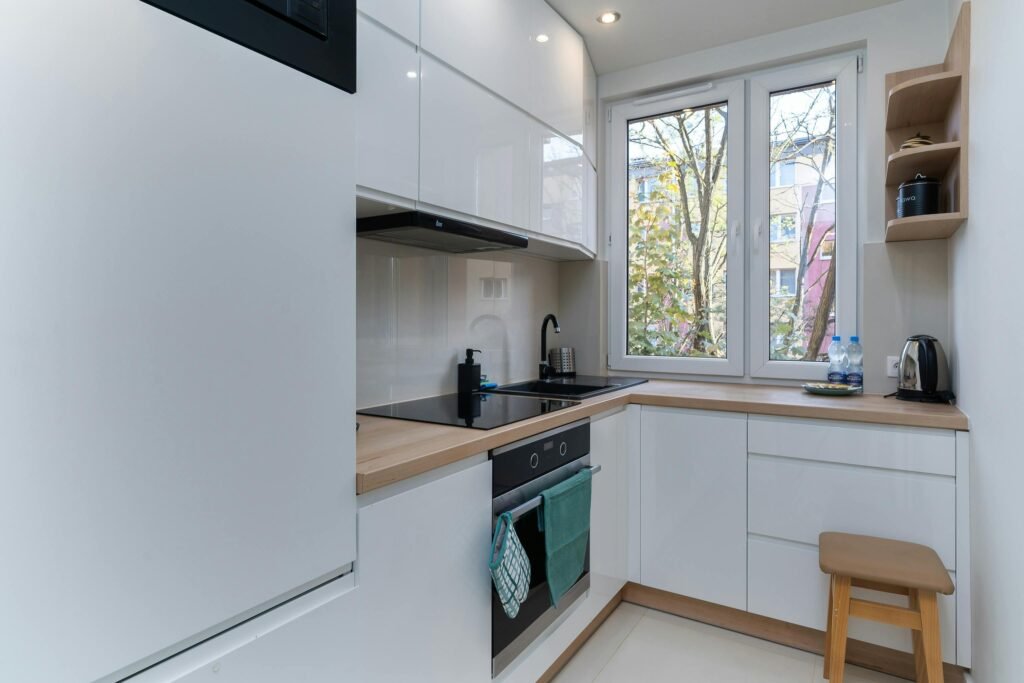
Clear worktops make small kitchens feel larger and function better. Every item on display should earn its place.
The minimalist approach:
- Keep only daily essentials out (kettle, knife block, utensil jar)
- Everything else goes away
- This creates visual space and functional workspace
Smart countertop solutions:
- Tiered stands create vertical storage for fruit or bread (less footprint than spreading items)
- Corner carousel organisers make use of awkward worktop corners
- Wall-mounted coffee pod holders or mug trees clear precious counter space
- Slim rolling trolley provides mobile storage (tuck beside fridge, roll out when cooking)
Design consistency matters: Choose items in matching finishes (chrome, black, or wood tones). Random colours and materials make spaces feel cluttered, regardless of actual organisation.
Under-Used Spaces You’re Probably Ignoring
Small kitchens hide storage potential in unexpected places. Learning to spot these areas separates adequate storage from excellent storage.
Hidden storage opportunities:
Below cabinets:
- Plinth space can accommodate shallow drawers
- Perfect for baking trays, placemats, or rarely used serving dishes
- Toe-kick areas often have gaps for wine racks or slim storage trays
Above cabinets:
- Space exists up to the ceiling
- Place attractive baskets for seasonal items or bulk purchases
- Area above doorways and windows can support slim shelving
On surfaces:
- Window sills work for herb pots or small jars (ensure sunlight suits what you’re storing)
- Back of kitchen door holds over-door organisers
Under the sink:
- Often poorly organised
- Pull-out units or stacking shelves multiply usable space
These forgotten zones can add 20-30% more storage capacity without any major renovation.
Small Pantry & Food Storage Ideas (No Pantry? No Problem)
Many UK flats lack a dedicated pantry space. You can still create an organised food storage system.
Pantry alternatives:
- Tall pull-out larder units (500mm-wide) function as standalone pantries
- Hold surprising amounts when properly organised
- Use the inside of cabinet doors for spice racks or packet storage
Container strategy:
- Clear containers make dry goods visible and stackable
- Square containers use space more efficiently than round ones
- Label everything clearly to prevent duplicate purchases and reduce food waste
Organisation systems:
- Create a snack basket or bin for grab-and-go items
- Use lazy Susans for oils, vinegars, and condiments
- Stackable shelf inserts double the usable height in cabinets
- Magazine files (turned sideways) hold packets, stock cubes, and pouches upright
These simple changes often double food storage capacity.
Budget-Friendly Small Kitchen Storage Ideas (UK Focused)
Effective storage doesn’t require massive spending. Many high-impact solutions cost very little.
Affordable UK retailers:
IKEA:
- KUNGSFORS and SUNNERSTA ranges provide professional results
- Rails and hooks at accessible prices
- Quality mechanisms that last
Wilko and B&M:
- Drawer organisers and storage bins at a fraction of designer prices
- Decent quality for light use
Pound shops:
- Basket organisers, hooks, and small containers
- Works well for light storage needs
Second-hand options:
- Facebook Marketplace and Gumtree offer kitchen storage
- Check for solid construction
- Clean thoroughly before use
Rental-friendly solutions:
- Command hooks and strips (hold light items without damaging walls)
- Tension rods create dividers in drawers and cabinets (£2-5 from hardware shops)
DIY approaches:
- Repurpose items you already own (magazine files, small boxes, jars)
- DIY floating shelves using reclaimed scaffolding boards and decent brackets
- Paint existing cabinets rather than replacing (fresh colour and new handles transform appearance)
Budget breakdown:
- £50-200: Basic improvements (rails, shelves, organisers)
- £300-800: Mid-range upgrades (pull-out units, drawer systems)
- £5,000-15,000: Full renovation with custom storage
Stylish Storage Ideas That Also Improve Kitchen Design
Storage should enhance your kitchen’s look, not compromise it. Good design and functionality work together.
Design elements that add style:
Glass and open elements:
- Glass-front cabinets create depth and interest (force organisation because contents are visible)
- Open shelving in consistent materials creates cohesion (wood, metal, or combination)
- Under-cabinet lighting transforms wall storage and improves functionality
Modern minimalism:
- Handleless cabinets with push-to-open drawers create clean lines
- Suits modern small spaces perfectly
- Prevents handles from catching on clothing or bags
Coordinated containers:
- Matching storage containers create visual calm
- Kilner jars, clip-top containers, or ceramic pots in one style
- Look intentional rather than chaotic
Material choices:
- Natural materials (wood, rattan, ceramic) soften hard surfaces
- Add warmth to small spaces
- Painted cabinetry in light colours reflects light and expands visual space
Finishing touches:
- Brass, copper, or matte black fixtures add character
- Consistent metallic finishes throughout tie storage elements together
Small Kitchen Storage Ideas by Kitchen Type
Different layouts demand different storage approaches. What works brilliantly in one kitchen fails in another.
Galley kitchens
Layout characteristics:
- Limited floor space, but good wall length
- Two parallel walls
Storage strategy:
- Maximise vertical storage on both walls
- Keep one side for cooking and prep
- Use the opposite wall for storage and the fridge
- Slim pull-out units fit between appliances (hold spices, oils, cleaning supplies)
- Avoid upper cabinets on both sides (creates tunnel effect)
- Open one side or use open shelving to maintain light
- Install floor-to-ceiling storage on end walls
Small flats and apartments
Common challenges:
- Awkward layouts with limited options for major changes
- Often rental restrictions
Flexible solutions:
- Freestanding storage (kitchen carts, shelving units, mobile islands)
- Can move between properties
- Maximise wall storage using command strips and damage-free mounting systems
- Under-bed storage containers for bulk purchases or seasonal kitchenware
- Consider storage furniture in adjacent rooms (sideboard in dining area for serving dishes)
Open-plan small kitchens
Design considerations:
- Storage needs to look good from multiple angles
- Everything is on display
Aesthetic approach:
- Choose attractive storage that doubles as decoration (wooden crates, woven baskets, glass jars)
- Create defined zones using storage furniture (kitchen cart or island for visual separation)
- Conceal clutter in closed cabinets
- Save open storage for attractive items and daily essentials
- Consistent colour schemes and materials create flow between the kitchen and living spaces
Common Small Kitchen Storage Mistakes to Avoid
We’ve seen these mistakes repeatedly. Avoiding them saves money and frustration.
Critical errors to avoid:
❌ Buying storage before decluttering
- Wastes money storing things you don’t need or use
- Always declutter first
❌ Choosing style over function
- Creates pretty but useless storage
- If you can’t reach it or access it easily, it fails
❌ Ignoring cabinet depth
- Shallow shelves in deep cabinets leave 30-40cm unused
- Plan internal organisation properly
❌ Over-filling storage
- Makes everything harder to access
- Leave 20% free space for the daily movement of items
❌ Mixing too many storage types
- Creates visual chaos
- Stick to two or three complementary systems
❌ Storing heavy items high up
- Dangerous and impractical
- Keep weighty pots and appliances at waist height or below
❌ Blocking access routes
- Frustrates daily use
- Maintain clear paths through your kitchen
❌ Failing to label storage
- Leads to disorganisation
- Matters particularly in shared households
When to Upgrade Storage During a Kitchen Renovation
If you’re planning a full kitchen renovation, storage design should drive the entire project. It’s not an afterthought.
Specification priorities:
Cabinet design:
- Specify deep drawers instead of standard base cabinets (40% better accessibility)
- Request internal drawer organisers during manufacturing (retrofitting costs more)
- Plan for full-height units where possible (maximise cubic storage and create architectural interest)
Hardware investment:
- Invest in quality mechanisms over fancy finishes
- Blum or Hettich runners for the last few decades
- Cheap alternatives fail quickly
- Consider handleless designs with push-to-open systems
Smart features:
- Incorporate appliance garages for small electricals (keep worktops clear but items accessible)
- Specify plug sockets inside deep drawers (charge appliances without cluttering worktops)
- Install plinth drawers beneath base units (uses otherwise wasted space)
- Internal cabinet lighting transforms functionality and atmosphere
Professional planning: A professional kitchen designer considers storage as part of the overall workflow. We plan how you’ll actually use your kitchen daily.
Expert Tips from a UK Kitchen Designer
After designing hundreds of small kitchens, these principles consistently deliver the best results.
Core design principles:
1. Prioritise the work triangle
- Keep your sink, hob, and fridge accessible with minimal movement
- Storage should support this workflow
2. Invest in corners
- Poor corner storage wastes 30-40% of available space
- Good corner solutions add substantial capacity
3. Think cubic, not linear
- Measure storage by volume, not just shelf length
- Vertical space matters as much as horizontal space
4. Choose quality mechanisms
- Cheap drawer runners and hinges fail quickly
- This makes storage frustrating rather than helpful
5. Plan for change
- Your storage needs will evolve
- Adjustable systems adapt better than fixed solutions
6. Light every zone
- Dark corners become forgotten zones
- LED strips cost little but transform usability
7. Maintain clear worktops
- Storage should enable this, not fight it
- Design storage that makes putting things away easier than leaving them out
8. Consider professional help
- A kitchen designer sees possibilities you might miss
- We’ve solved these challenges hundreds of times
Ready to Transform Your Small Kitchen?
Smart storage transforms how a small kitchen functions. The strategies in this guide work in real UK homes, from terraced houses to compact flats.
The difference between cramped and capable often comes down to planning. Understanding your space, choosing the right solutions, and installing them properly matters enormously.
At Best Hommes, we design kitchens that work brilliantly in small spaces. We’ve spent years solving storage challenges in homes across the UK.
If you’re planning a kitchen renovation or need professional storage design, we’d be happy to help. Our team creates practical, stylish kitchens that maximise every centimetre.
Visit besthommes.co.uk to see our work and discuss your project. Good storage design changes everything.
Comparison Table: Small Kitchen Storage Solutions
| Solution | Best For | Pros | Cons | Approx. UK Cost |
| Wall-mounted shelves | Frequently used items | Open, airy, easy access | Dusty, needs upkeep | £20–£100 |
| Floor-to-ceiling cabinets | Maximising cubic storage | Huge capacity, focal point | Costly, harder to reach top shelves | £500–£2000 |
| Slim pull-out units | Narrow kitchens | Efficient, visible storage | Limited width | £150–£400 |
| Corner units (Magic Corner/LeMans) | Corner cabinets | Adds 30–50% more space | Expensive, complex install | £200–£700 |
| Pegboards & hooks | Utensils & small pans | Flexible, inexpensive | Needs wall support |
FAQs
How do you maximise storage in a small kitchen?
Focus on vertical space first. Install wall-mounted shelves, tall cabinets, and hanging rails. Use internal organisers in drawers and cabinets to multiply capacity. Declutter regularly and only store items you actually use. These changes typically double effective storage.
What is the best storage solution for a narrow kitchen?
Slim pull-out units work brilliantly in narrow spaces. They fit gaps as small as 150mm and hold spices, oils, or cleaning supplies. Wall-mounted rails and magnetic strips also maximise storage without using floor space. Keep worktops clear to maintain usable width.
Are open shelves good for small kitchens?
Yes, when used strategically. Open shelves make spaces feel larger because you can see the wall behind them. They work best for frequently used items that stay tidy on their own. Mix open shelving with closed cabinets to balance display and concealment. Avoid them above hobs where grease builds up.
How can renters add kitchen storage without drilling?
Use command strips, tension rods, and freestanding furniture. Over-door organisers, magnetic strips, and adhesive hooks create storage without damaging walls. Kitchen carts and trolleys provide mobile storage that can be moved between properties. Most landlords permit small picture hooks if needed.
What should you not store in a small kitchen?
Eliminate duplicate tools, rarely used appliances, and expired food. Don’t store items you haven’t used in the past 6 months. Remove bulky packaging and decant into space-efficient containers. Avoid keeping seasonal items in prime storage. These take up valuable space that daily essentials need.
How much does small kitchen storage cost in the UK?
Budget solutions start at £50- £200 for rails, shelves, and organisers from IKEA or Wilko. Mid-range improvements, such as pull-out units or drawer systems, cost £300-£800. A full renovation with custom storage costs £5,000-£15,000, depending on size and quality. Focus spending on mechanisms that improve daily use.


